
The game
Big and Small: the classic 4D bets explained
Anyone who has played traditional 4D has met Big and Small forecasts. What they are, how they differ, and how they relate to the tickets on fourdigits.
Two ways to cover a number
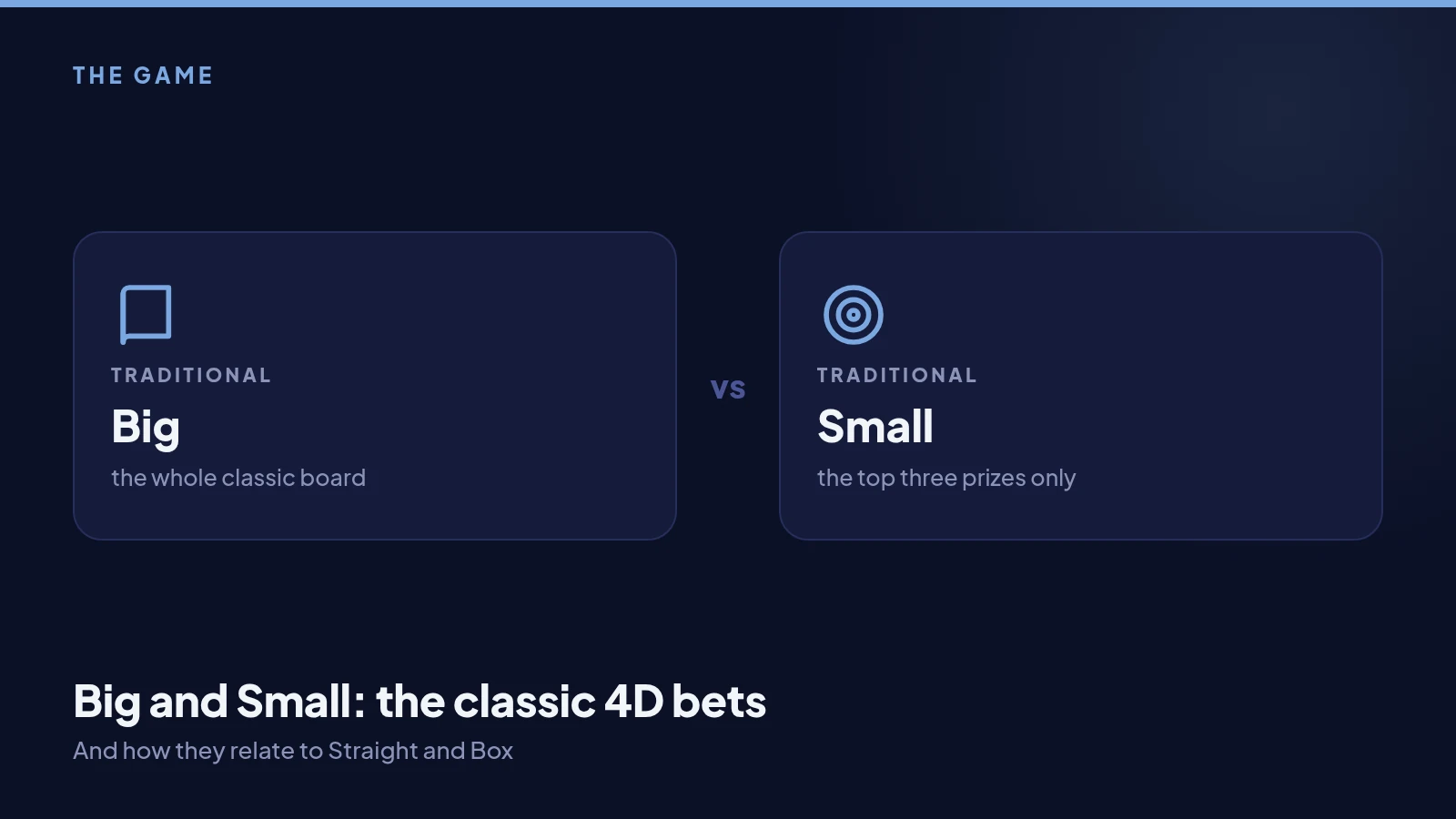
Traditional 4D is usually played as Big or Small. A Big bet covers a number across the whole classic board: first, second and third prize, the ten Starter prizes and the ten Consolation prizes. A Small bet covers the same number for the top three prizes only.
Why two
Big spreads a stake across more ways to win, so each prize it pays is smaller. Small concentrates the stake on the top three, so each of its prizes is larger. Players have long chosen between them by temperament: a steadier chance of something, or a narrower shot at more.
iBox and permutations
Both Big and Small can be played on a single ordering of the digits or on every arrangement, usually called a permutation or iBox. An iBox spreads one stake across all the arrangements, which is why its prizes are divided by the number of orderings covered.
On fourdigits
fourdigits keeps things to two ticket types. A Straight covers one number exactly and a Box covers every arrangement, with the stake paid on each arrangement so every prize stays a clean multiple. Every ticket is paid across all four tiers of the board, from first prize down to Luck By Chance.