
Your funds
Self-custody wallets and exchange wallets: the difference
Your crypto can sit on an exchange or in a wallet you control yourself. What each means, the trade-offs, and which suits someone who simply wants to play.
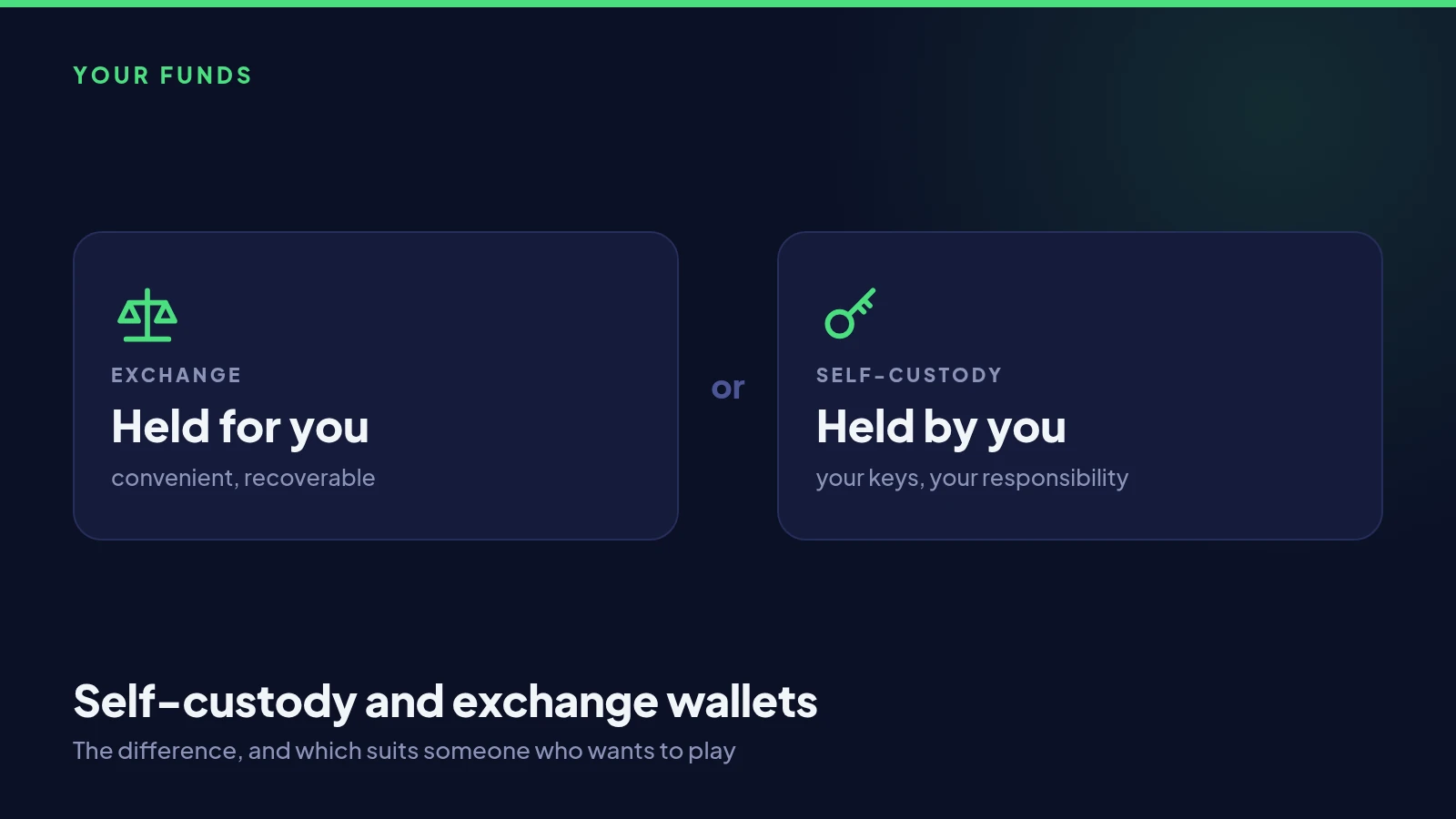
An exchange wallet
When your USDT sits on an exchange, the exchange holds it for you, much as a bank holds money. It is convenient: you sign in with a password and an authenticator, and the exchange handles the technical side. The trade-off is that you depend on the exchange being secure and solvent.
A self-custody wallet
A self-custody wallet, such as a mobile wallet app or a hardware device, holds your coins under keys that only you control. Nobody can freeze or lose them for you. The trade-off is that nobody can recover them for you either: lose the keys and the coins are gone.
Which to use for playing
For moving modest amounts in and out of fourdigits, a reputable exchange is usually the simplest route. Buy, send to your deposit address on BNB Smart Chain, and withdraw back the same way. A self-custody wallet makes more sense for amounts you plan to hold for a long time.
Either way
Your fourdigits Wallet is a balance on your fourdigits account, not a blockchain wallet you manage. Withdrawals go to whichever address you save, exchange or self-custody. Keep only what you intend to play with on any platform, and move the rest somewhere you control.