
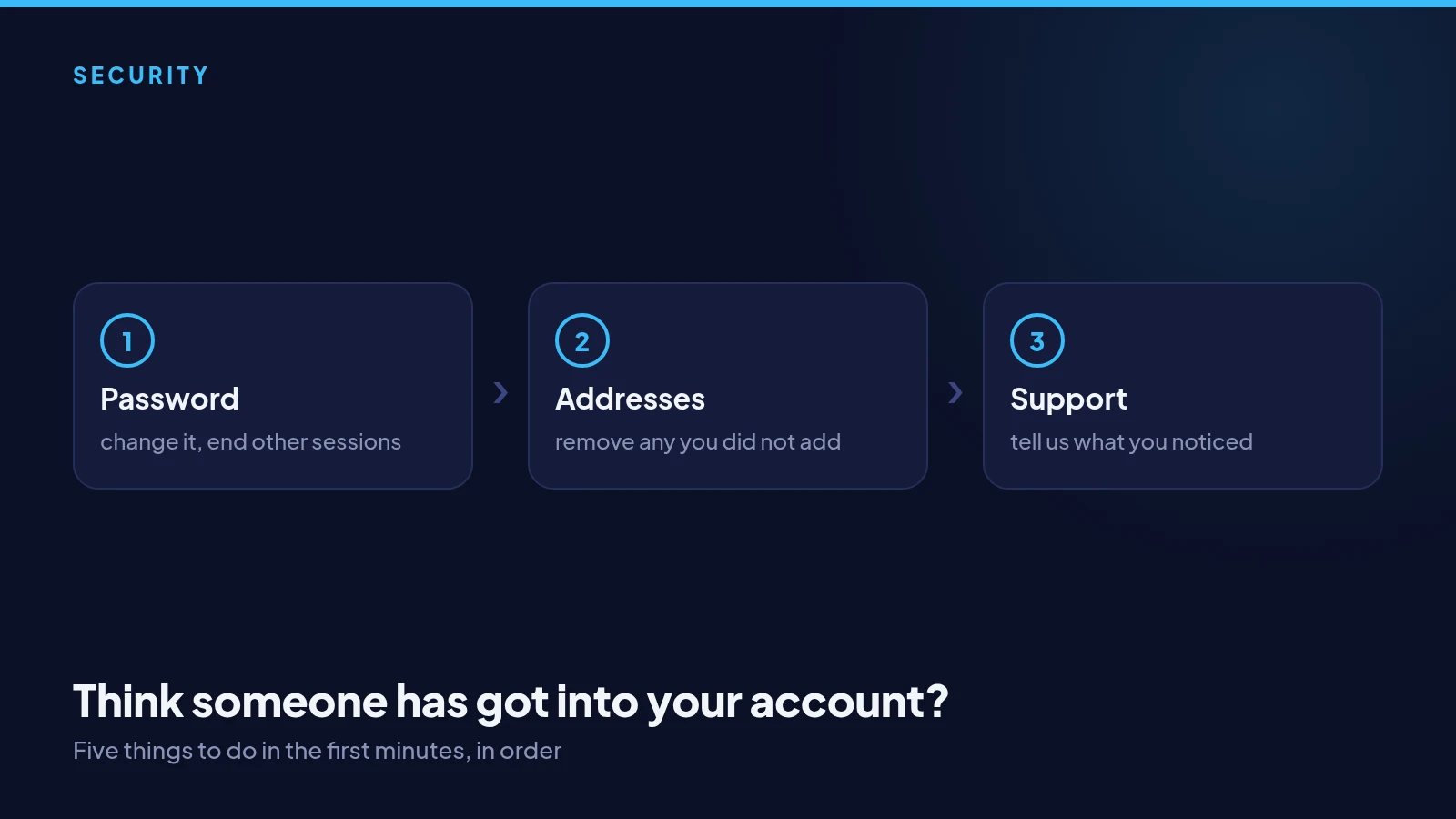
Think someone has got into your account? Do these five things
An unexpected sign-in email, a withdrawal address you did not add, or a password that no longer works. What to do in the first minutes, in order.
30 July 2026
The journal
Straight answers about the draw, the odds and your money — from the people who built it. No tips, no systems, no lucky numbers.
An unexpected sign-in email, a withdrawal address you did not add, or a password that no longer works. What to do in the first minutes, in order.
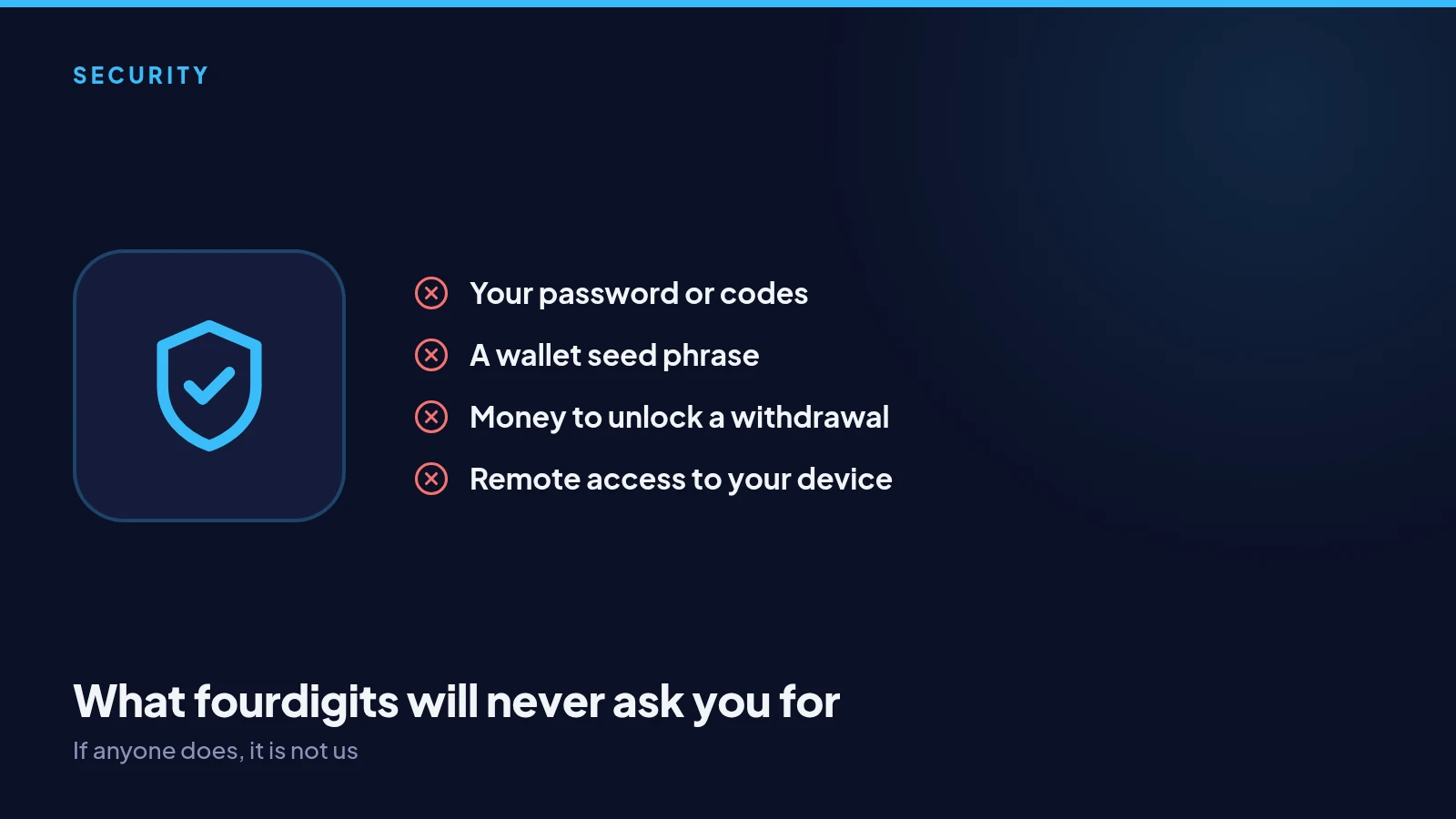
Scams work by asking for the one thing a real company never would. Here is the full list. If anyone asks you for any of it, whatever name they use, it is not us.
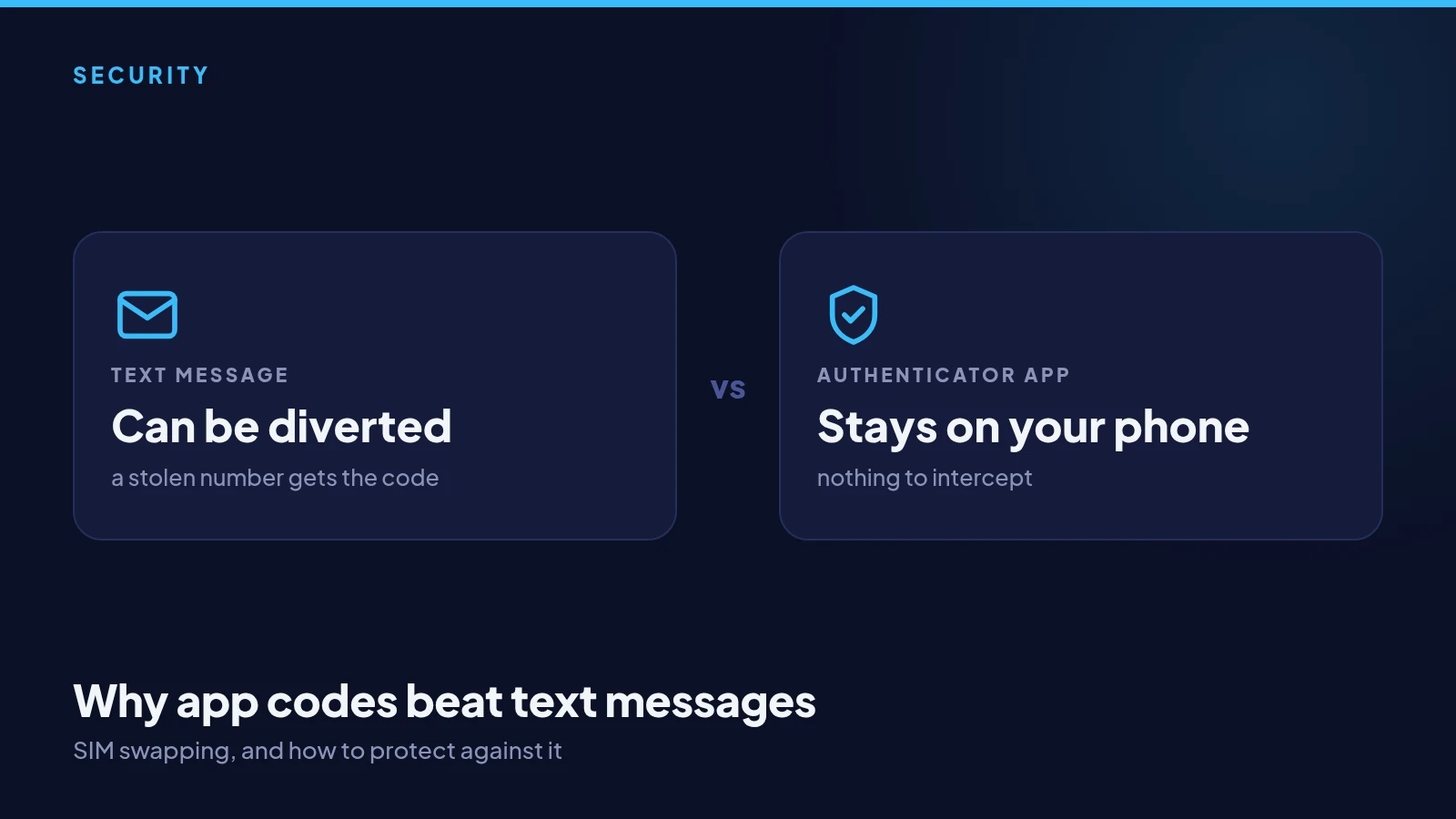
Codes sent by text message can be stolen by moving your phone number to someone else’s SIM card. Codes from an authenticator app cannot. What SIM swapping is and how to protect against it.
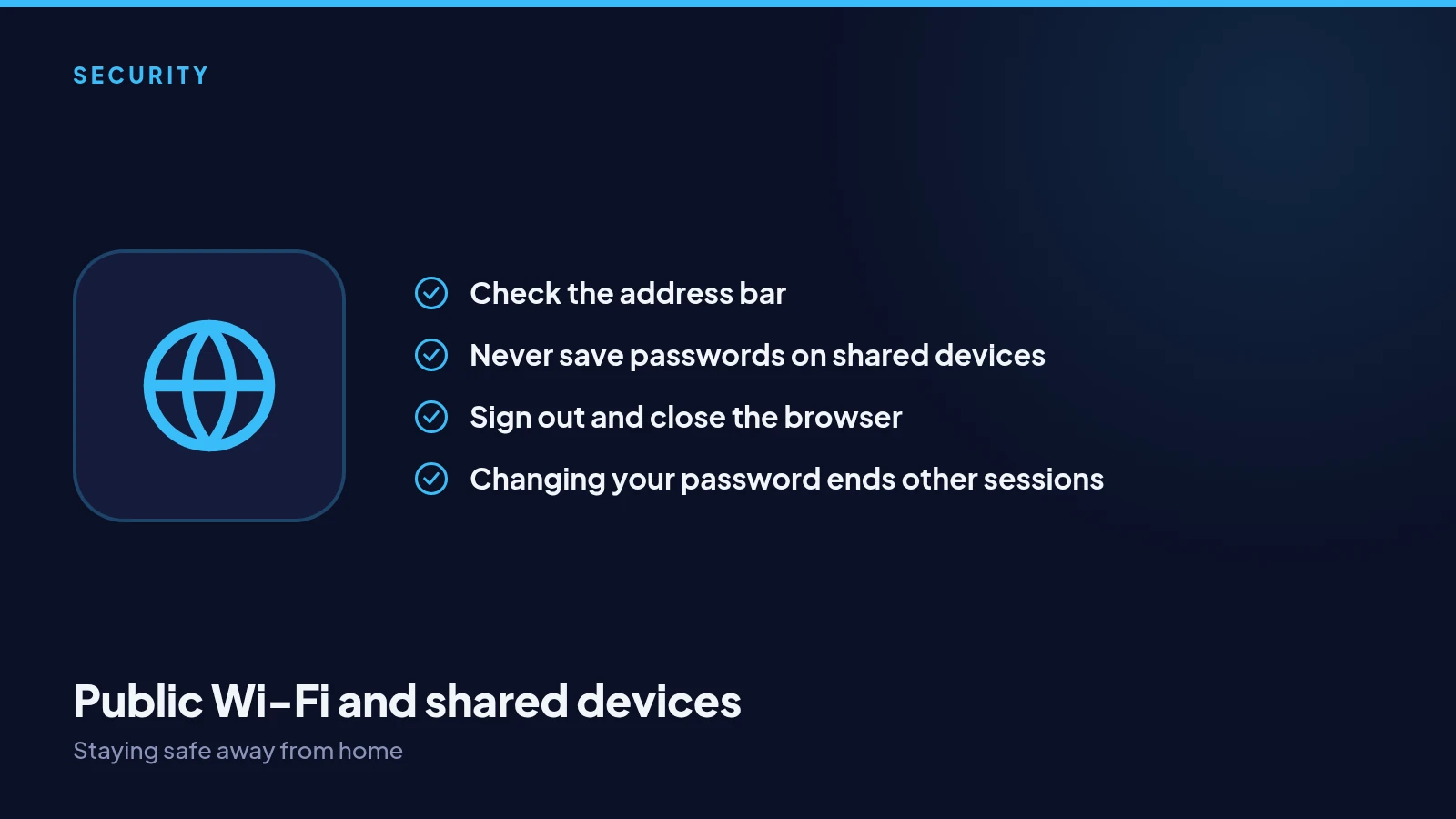
Cafés, airports, hotel business centres and a friend’s laptop are all places people sign in without thinking. A few habits keep your account yours wherever you play.
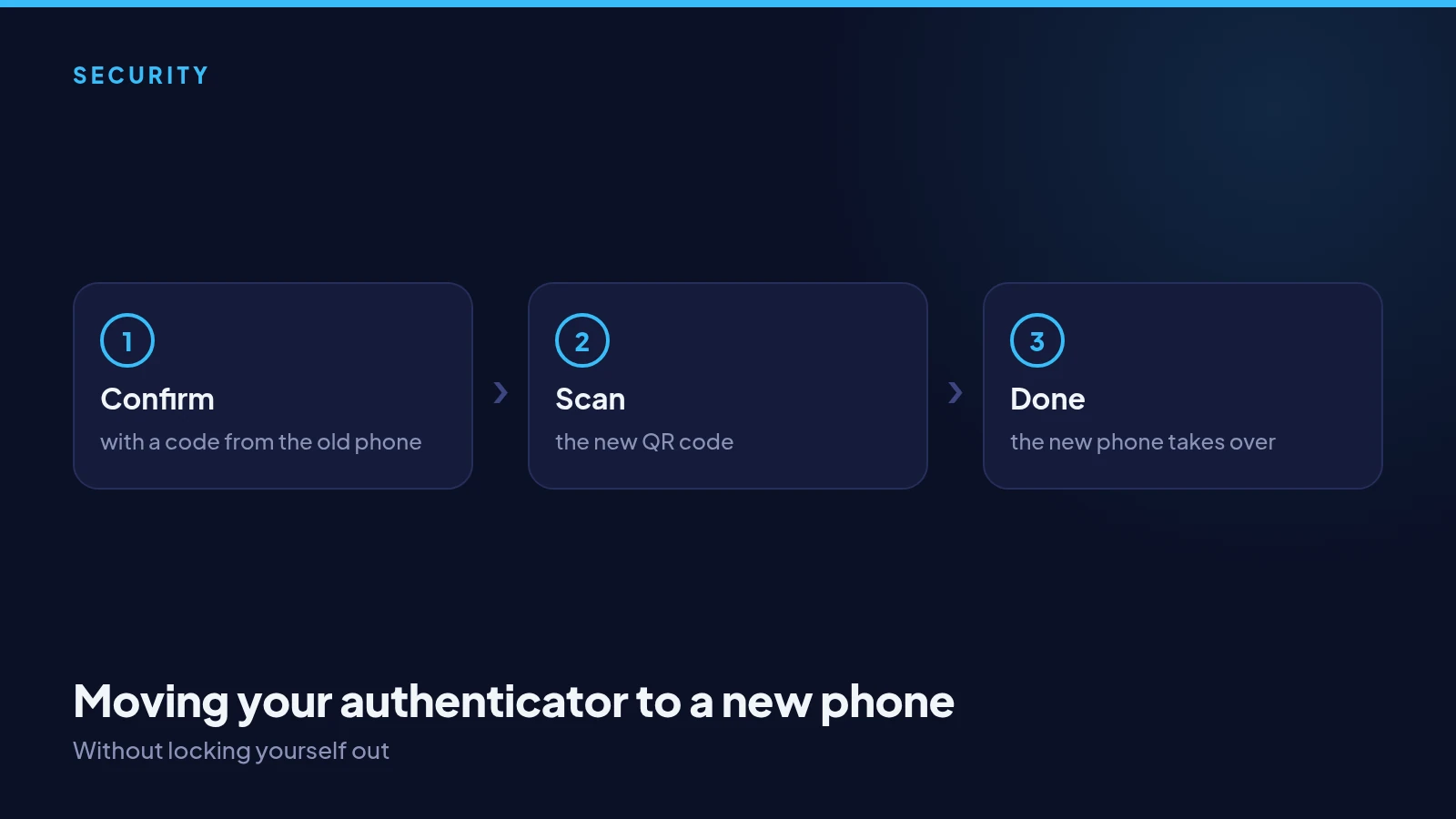
New phone, same account. How to move two-factor authentication across without locking yourself out, and what to do if the old phone is already gone.
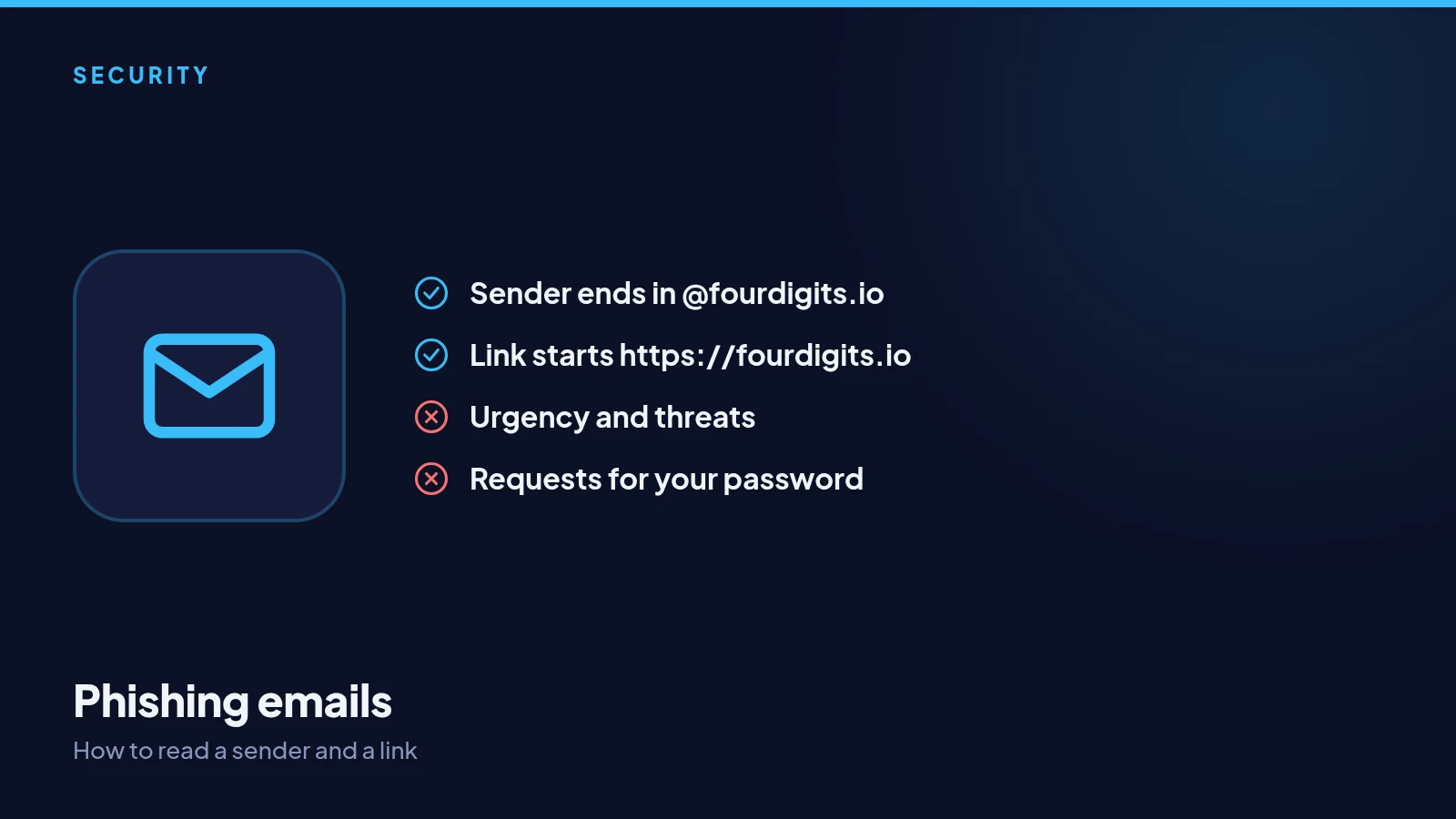
A convincing email with a logo and your name can still be fake. Two things give nearly all of them away: the real sender address and where the link actually goes.
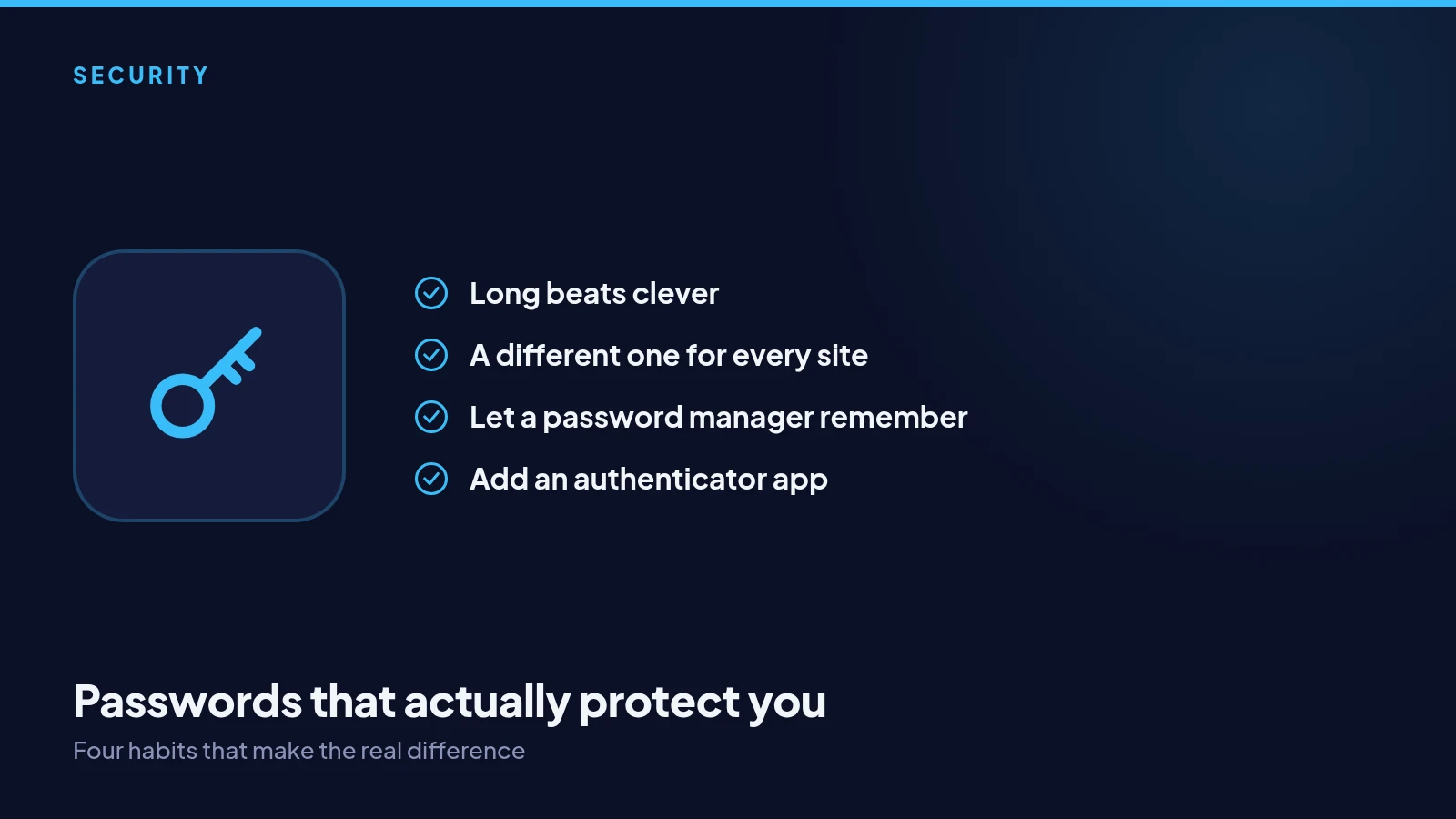
Length beats cleverness, and never reusing a password beats both. The small number of habits that make a real difference, and the tool that makes them easy.
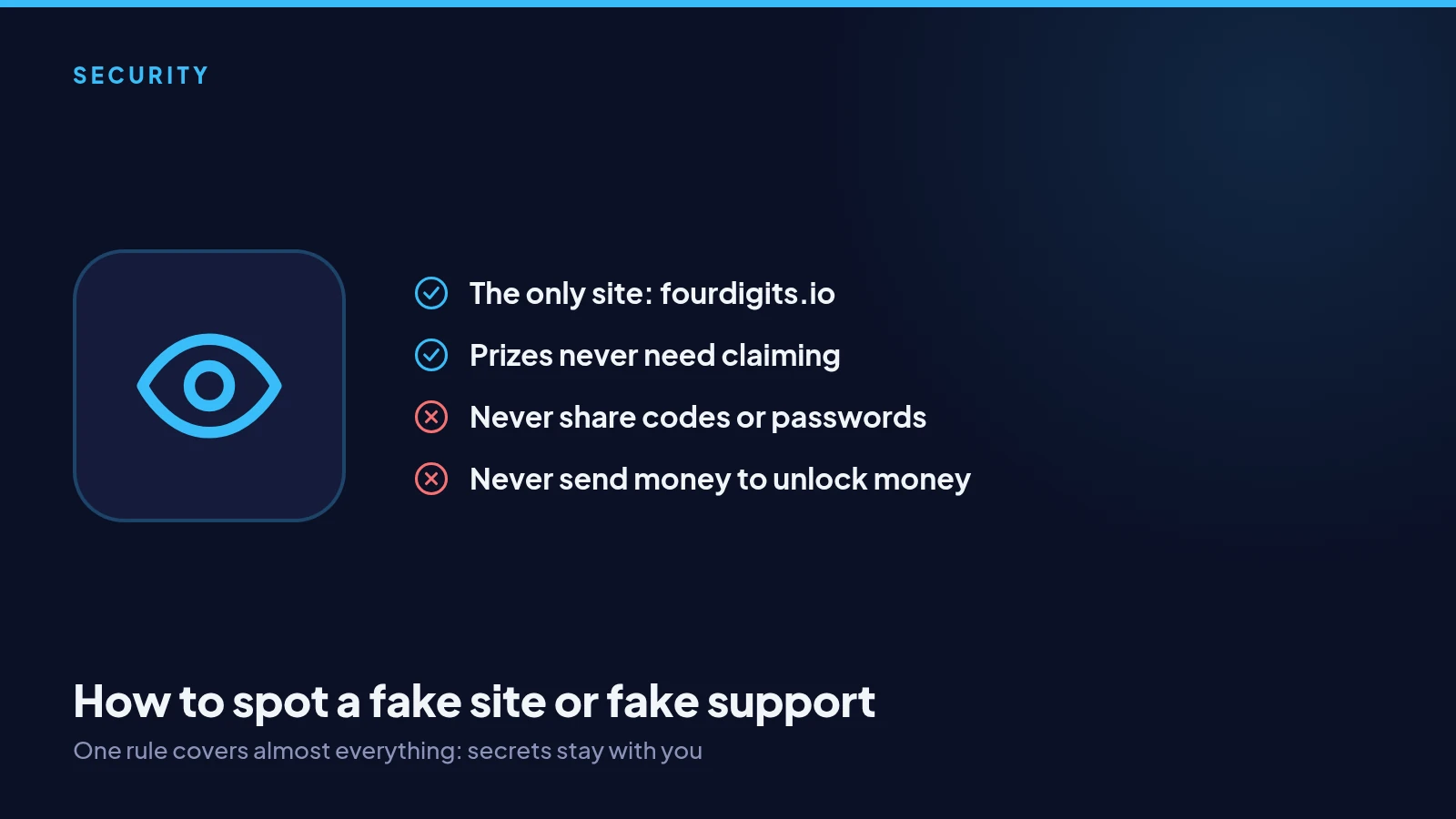
Scammers copy popular sites and pretend to be their staff. The address bar, a few habits and one simple rule protect you from nearly all of it.
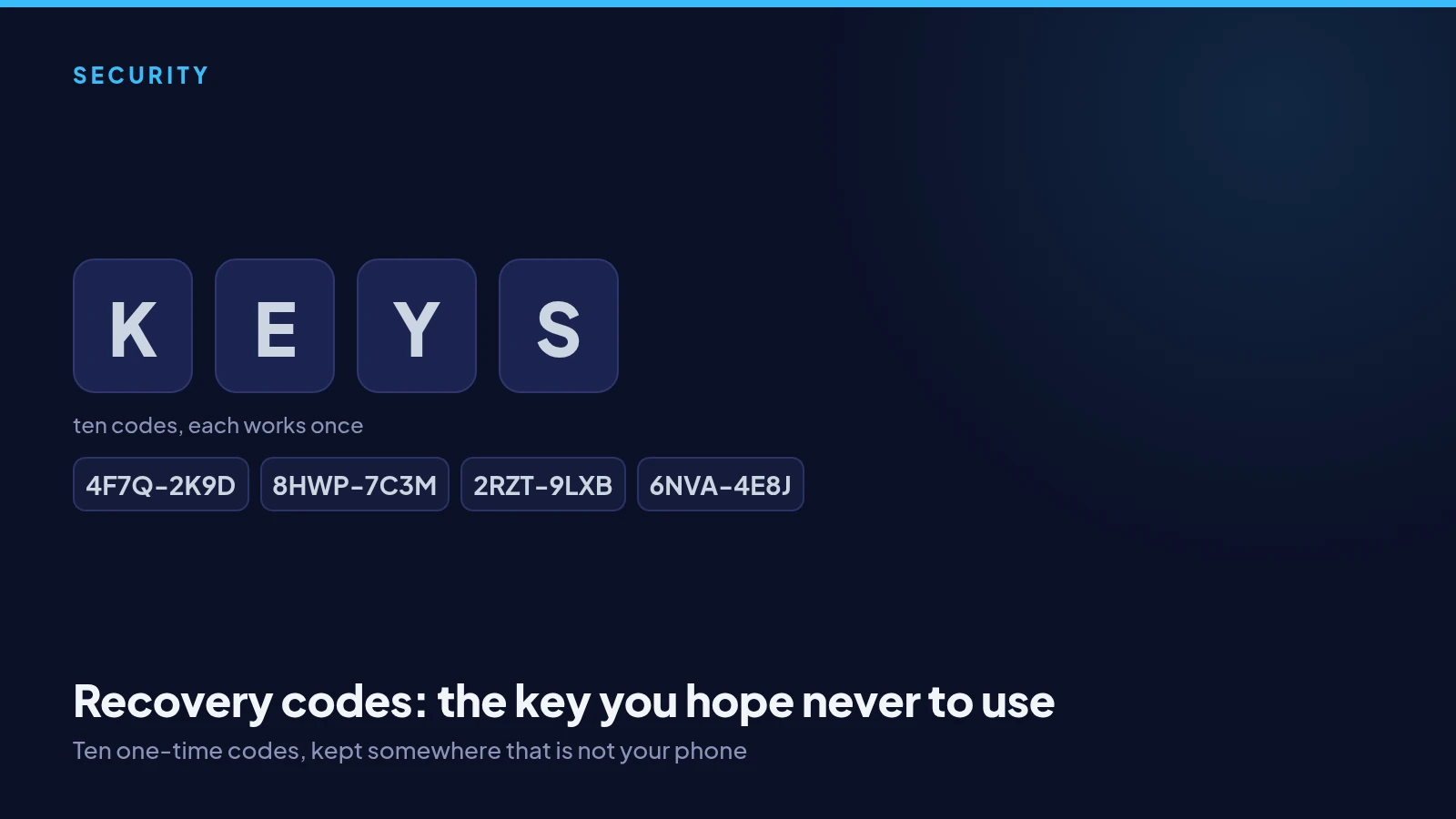
When you turn on two-factor authentication you get ten recovery codes. What they are for, where to keep them, and what happens when you use one.
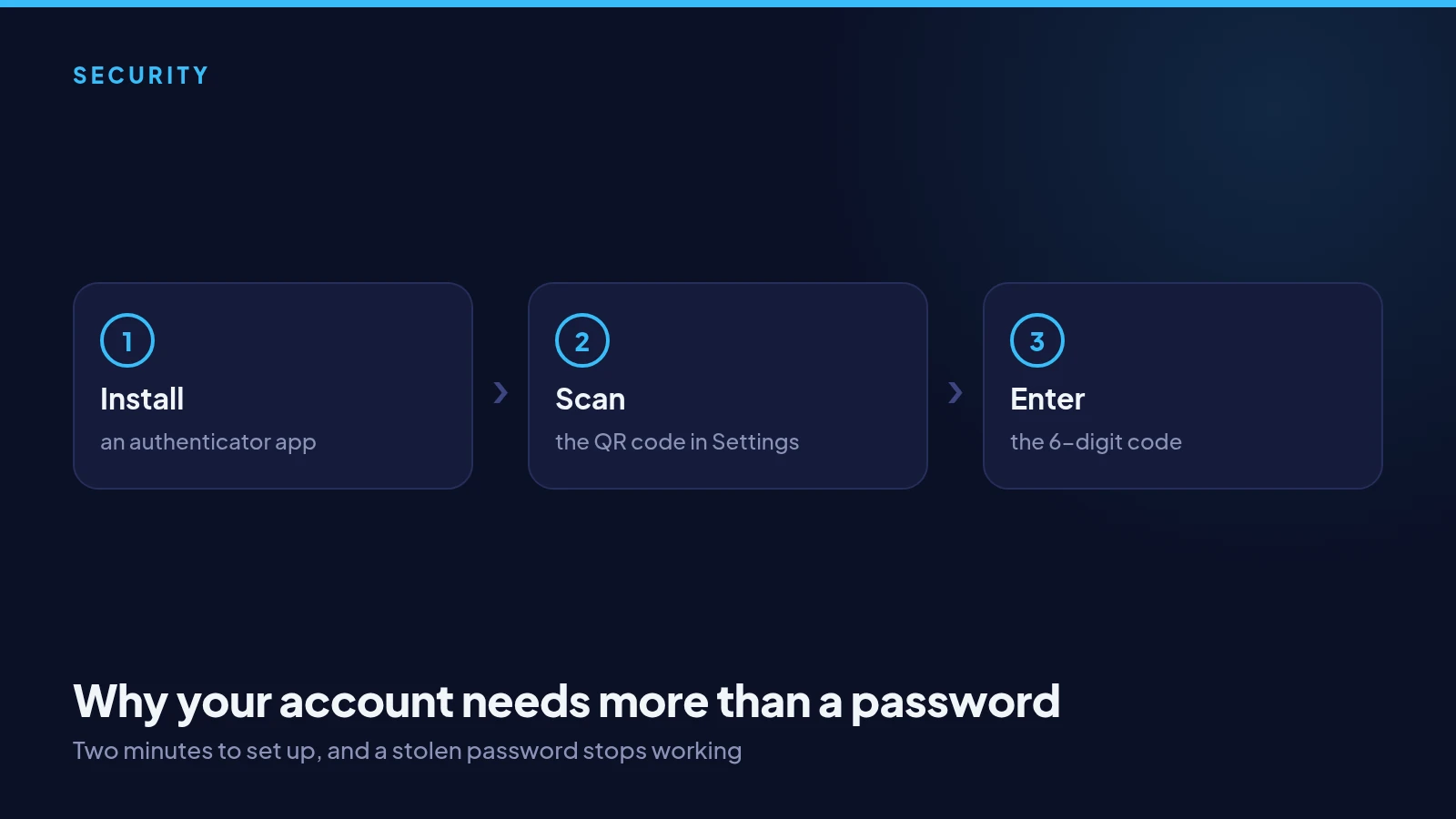
A password can be guessed, reused or leaked from somewhere else entirely. An authenticator app adds a second step nobody can copy from a data breach. Here is how it works.